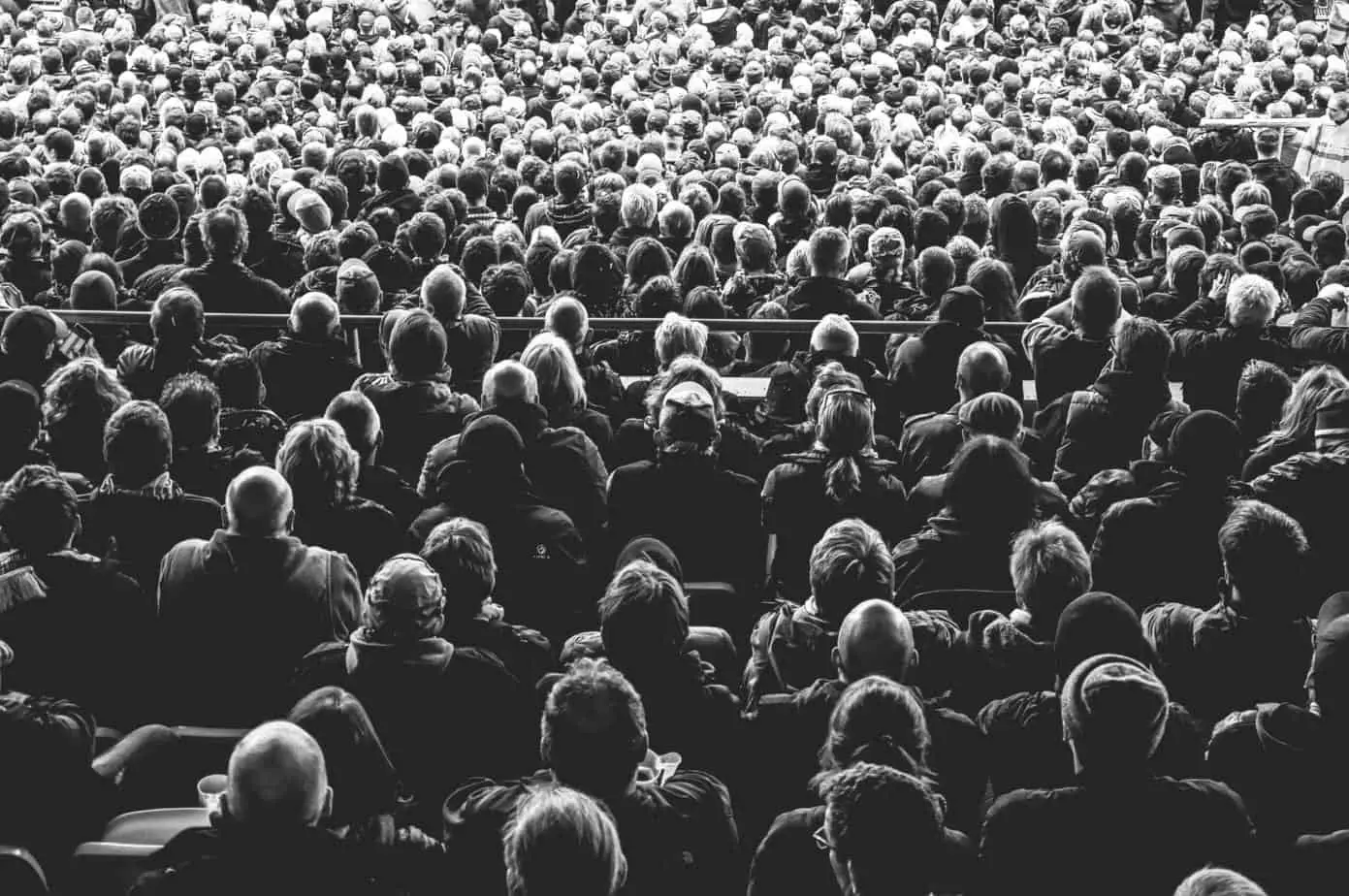
The gray man philosophy is simple: don’t stand out. Move through your environment without drawing attention. Don’t announce what you have, where you’re going, or what you’re capable of. Be the person no one notices, and no one remembers.
Most people associate this concept with disaster scenarios or operational security. That’s where the term gets used most often. But the underlying principle applies every day, in ordinary environments, for people with no tactical background at all. If you’re walking through a parking garage, traveling in a foreign city, or just moving through a part of town that isn’t yours, gray man thinking is the tool that keeps you from becoming the obvious target in the room.
Why This Works: The Research
Back in grad school, I came across a study called Attracting Assault: Victims’ Nonverbal Cues, published in 1981 by Betty Grayson and Morris I. Stein. The premise was straightforward: do people signal vulnerability through their body language and behavior in ways that criminals can read?
They showed footage of pedestrians to convicted violent offenders. Without any other information, the offenders were able to consistently identify which pedestrians they would have targeted — and they largely agreed with each other. The signals they picked up on had little to do with physical size or obvious wealth. It was how people moved. Gait, posture, awareness, energy. People who moved with purpose and awareness were passed over. People who looked distracted, uncertain, or unaware were selected.
That research is over forty years old and it still holds up. Criminals are reading you before you’ve noticed them. That’s the baseline this philosophy addresses.
What You Control
Gray man isn’t about becoming invisible. You can’t eliminate your presence. You can manage what signals you send. A few specific areas to think through:
Clothing. Clothing is the most controllable signal you send. Neutral colors, normal fits, nothing that broadcasts money or tactical gear. This doesn’t mean dressing down or dressing up — it means dressing like a person who fits wherever they’re going. A well-dressed person in a business district is unremarkable. The same person in a neighborhood they don’t fit sticks out immediately. Context matters more than the specific clothes. Blend into where you actually are.
Uniforms are an exception — if your job requires distinctive attire, don’t overthink it. Focus on the things you can control when you’re not working.
Jewelry and visible wealth. Jewelry signals value. In most everyday contexts, wearing a nice watch or modest jewelry is a non-issue. In a higher-risk environment — traveling internationally, moving through an unfamiliar area, any situation where you’re away from your normal context — visible wealth becomes a targeting signal. Do you need to be wearing a $10,000 Rolex while traveling through an impoverished country where that amount exceeds the median annual income by a factor of ten? That’s a decision that comes with consequences you can choose to avoid.
The principle applies to anything visible that communicates high value: camera gear, expensive bags, visible electronics.
Electronics and awareness. Most people walking through public spaces have their heads down in their phones. They’ve opted out of situational awareness in favor of whatever’s on the screen. This is exactly the behavior the Grayson study identified as selecting for victimization. If you’re distracted, you can’t read pre-event indicators — and you look like someone who can’t read pre-event indicators. Both of those things are problems.
Put the phone away when you’re moving through public spaces. You can check it when you’re somewhere stable and aware of your environment.
Gray Man and Your Gear
This is where gray man philosophy intersects with everyday carry in ways that matter for Option Gray readers specifically.
Tactical gear announces tactical intent. A full molle vest, a plate carrier worn in a non-tactical environment, a bag covered in velcro patches and flag attachments — these things communicate that you are prepared in a way that draws attention. Most of the time, that attention is unwanted. It tells people with bad intentions that you have things worth taking, and it tells everyone else that you’re someone they should watch.
Carrying intentionally means choosing gear that does the job without broadcasting the job. A civilian backpack instead of a tactical bag. A plain leather holster under a cover garment instead of an obvious outside-the-waistband setup. A quality knife with a discreet clip position instead of one mounted in a way that announces its presence. You can carry everything you need without wearing it as a signal.
This is what gray man looks like in practice for someone who carries daily: capable gear in a package that doesn’t advertise capability.
Movement and Posture
Going back to the research: what the offenders in the Grayson study picked up on most was how people moved. Posture, gait, and awareness level. Someone who walks with their head up, moves with purpose, and looks like they know where they’re going communicates a different message than someone who shuffles with their eyes down and looks uncertain.
This doesn’t mean walking around looking like a threat. It means moving like someone who is present and aware. You don’t broadcast strength. You just don’t broadcast weakness.
The Point
Gray man philosophy isn’t about being invisible or paranoid. It’s about not making yourself the obvious choice. In any environment where selection happens — and criminals do select, consistently, based on readable signals — the goal is to be the person who doesn’t register as an opportunity.
You manage what you can control: how you dress, what you display, how you move, where your attention is. The signals you send tell a story. Gray man is about being intentional with that story.
Where do you apply this in your own daily routine? Most people find the electronics piece hardest. Start there.