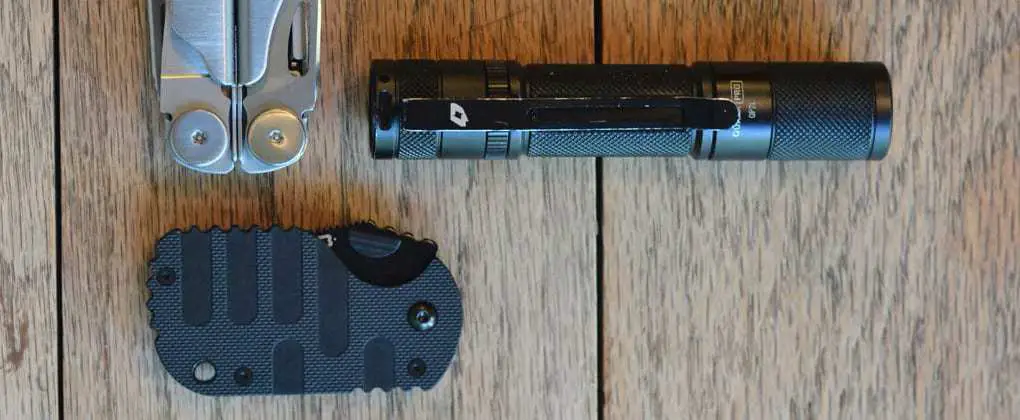
Most people carry the same three things every day without thinking about it: their phone, their wallet, and their keys. That’s EDC by default. The difference between that and intentional EDC is the difference between reacting to whatever the day throws at you and being prepared for it.
Everyday carry is the practice of deliberately selecting and consistently carrying a set of items that help you handle daily life, unexpected situations, and genuine emergencies. The gear changes from person to person based on lifestyle, job, and threat environment. The philosophy behind it doesn’t.
What EDC actually is
EDC started as a practical concept: what do you actually need on your person every day to function and stay capable? Over time it became a community, a hobby for some, and a rabbit hole of gear optimization. That’s fine. But the core question is still the same. What do you carry, and why?
The “why” matters more than the gear list. A good EDC is built around your actual life, not an idealized version of preparedness or what someone else carries. What problems do you actually run into? What are the realistic emergencies in your environment? Your setup should answer those questions, not someone else’s.
The tier system
At Option Gray we organize EDC into tiers based on what’s physically on your body at all times, what’s in your immediate carry, and what’s accessible nearby. Understanding the tiers helps you make smarter decisions about what belongs where.
Primary EDC is what’s on your person in any clothes, any situation. Phone, wallet, keys, a light, a knife. These are the items that go with you from the car to the grocery store to the office. If you wouldn’t carry it to a job interview, it probably doesn’t belong in your primary EDC.
Secondary EDC is what’s in your bag, jacket, or vehicle — always accessible but not always on your body. A trauma kit. A larger light. A backup battery. Tools that take more space but are worth having when things go sideways.
Extended EDC is your vehicle kit, go bag, or home cache. Not daily carry, but accessible within minutes and stocked for scenarios that go beyond a typical day.
Most EDC content focuses entirely on primary EDC — the pocket knife debate, the flashlight comparison, the wallet obsession. The tiers matter because they let you make smarter decisions. You don’t need to carry everything everywhere. You need to carry the right things at each layer. See The Three Tiers of Everyday Carry for a full breakdown.
What actually belongs in your EDC
Not everything. That’s the first answer. The second depends on your life.
Here’s what most serious EDC carriers have settled on as genuinely useful in primary carry:
A dedicated light. Not your phone. A quality EDC flashlight like the Streamlight Wedge fits flat in a pocket and provides significantly more usable light than a phone camera. You’ll use it more than you expect — locating something in a dark parking garage, checking a situation before you react, working under your car. A light earns its place every week.
A folding knife. Handles a hundred daily tasks before it ever comes close to a defensive role. Boxes, packaging, cord, food prep. A Spyderco or Benchmade in the $80 to $150 range is where quality starts to matter. Below that you’re carrying something that won’t hold an edge. See how to choose an EDC knife for specifics.
Your phone, used deliberately. Offline maps loaded before you need them. Emergency contacts you’ve verified. A charged battery. A dead phone is not EDC — it’s a liability.
A stripped-down wallet. Cards you actually use, some cash, an ID. The minimalist wallet trend isn’t about aesthetics. A bulky wallet stuffed with receipts and loyalty cards slows you down and wears out your pocket.
Cash. Card readers go down. Systems fail. Having $40 to $60 in small bills costs you nothing and has bailed people out of genuine inconvenience on a bad day. It’s one of the easiest habits to build.
Basic medical. This is the gap in most people’s primary EDC. A tourniquet — a SOFTT-W or CAT — and a small hemostatic gauze like QuikClot or Celox covers the most likely trauma scenarios. These are small, require minimal training to deploy, and are the items most likely to save a life. See how to build an EDC pocket trauma kit for a practical starting point.
What you don’t need
A $500 titanium money clip and 12 knives. EDC optimization is a hobby for a lot of people and that’s not a problem, but the goal is capability, not collection. If you’re buying gear faster than you’re training with it, your priorities are backward.
More gear is not more prepared. The person who carries three items they know how to use under pressure is better prepared than someone with a full kit they’ve never actually deployed.
Building your setup
Start with the obvious layer and work outward. Phone, wallet, keys. Add a dedicated light. Add a knife. Carry those consistently for a month and notice where you run into gaps — situations where you wished you had something you didn’t. Let your actual life tell you what else belongs.
The goal is a setup you carry every day without thinking about it. That consistency is what makes EDC useful. Gear that stays in the drawer because it’s uncomfortable or inconvenient doesn’t count.
If you’re adding a firearm to your primary carry, choosing the right holster is where that conversation starts.
What’s in your primary EDC right now?