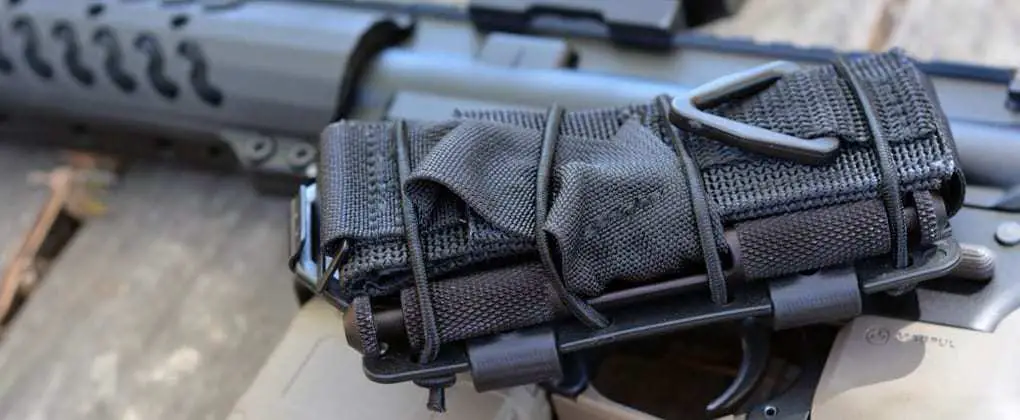
The tourniquet is the single most impactful item most EDC carriers aren’t carrying. It takes up less space than a folding knife, costs less than a quality flashlight, and is the difference between a trauma situation being survivable or not.
Severe extremity bleeding — from a car accident, a power tool, a workplace injury, or a gunshot wound — can be fatal in three to five minutes without intervention. EMS average response times in most urban areas run 8 to 12 minutes. That gap is where tourniquets matter.
You don’t need to be a medic to apply one. The two most commonly carried tourniquets are designed to be applied one-handed, under stress, to yourself or someone else. The skill threshold is low relative to the stakes.
Which tourniquet to carry
There are two worth carrying: the SOF Tactical Tourniquet Wide (SOFTT-W) and the Combat Application Tourniquet (CAT). Both are TCCC-approved. Both have extensive real-world documentation. Both work.
The SOFTT-W sits flatter when packaged, which matters for EDC carry, and some people find it easier to apply one-handed. The CAT has a windlass that self-locks, which is simpler under stress. Try both if you can. Carry the one you can apply correctly, every time, in under 30 seconds.
Don’t buy a $10 knockoff from a general marketplace. Non-name-brand tourniquets fail under the pressure required to actually occlude blood flow. A genuine SOFTT-W or CAT runs $25 to $35. That’s what your life or someone else’s costs.
Where to carry it
Primary carry means it’s on your body and accessible without going into a bag. There are three practical methods:
Ankle carrier. The PHLster Flatpack mounts flat against the ankle or calf and keeps the tourniquet out of the way while remaining accessible. Good for people who want it on their body without printing. Less accessible than belt carry but better than bag carry.
Belt or waistband carrier. A dedicated belt carrier at the appendix or rear keeps the tourniquet immediately accessible. More visible but fastest to deploy. Works well if you’re comfortable with overt EDC.
Pocket carry. A SOFTT-W can be folded into a cargo pocket or jacket pocket using a carrier like the Tourni-Kwik. Accessible and low-profile. Less ideal if your hands are the injury — reaching across your body to a pocket is harder than reaching to your ankle or belt.
At minimum, carry it in your bag — a laptop bag, backpack, or vehicle kit. This is the floor, not the ceiling. A tourniquet in your bag covers most scenarios you’ll encounter. It doesn’t cover the scenario where your hands are injured and you need to apply it to yourself one-handed, but it’s vastly better than not having one.
Pair it with a hemostatic dressing
A tourniquet handles extremity bleeding. It doesn’t help with wounds to the torso, neck, or groin. That’s where hemostatic gauze comes in.
QuikClot Combat Gauze and Celox Gauze are the two most documented options. Both accelerate clotting significantly faster than standard gauze. Pack the wound, apply direct pressure, hold it. A small roll of either fits in any bag, any kit.
A tourniquet and hemostatic gauze together cover the majority of traumatic bleeding scenarios you’re likely to encounter. That’s a complete basic trauma kit in less than half a pound.
Carry it consistently
Whatever position you choose, carry it there every day. Your hands should know where it is without looking. If it lives in your range bag three weeks out of four and your ankle carrier one week, you don’t actually carry it.
Set a location and commit to it. Same side, same position, every day.
Train with it
Buy two. Use one for training. Apply it to yourself with one hand, from your carry position, with your eyes closed. The standard is under 30 seconds. Practice until you’re there.
Stop the Bleed courses run nationwide and take about two hours. They cover tourniquet application, wound packing, and direct pressure for bleeding control. It’s the minimum training for anyone who carries medical gear.
The tourniquet requires less knowledge to use correctly than almost any other life-saving tool and has one of the highest documented impacts on survival in trauma situations. There’s no good reason not to carry one.