Matches are a solid fire-starting option: simple, lightweight, no batteries, no fuel to worry about. The one problem is moisture. A wet match is useless. In the conditions where you actually need fire — cold, wet, windy — an unprotected match is the least reliable tool you could reach for.
Keeping matches dry isn’t complicated, and you don’t need to buy anything to do it. Here are the methods, from simplest to most purpose-built.
Wax Coating (No Gear Required)
Strike-anywhere matches can be waterproofed by dipping the heads in paraffin wax. Melt a small amount of wax, dip each match head, let it dry on wax paper. The wax seal keeps moisture out and burns off almost instantly when you strike. This works well for kitchen matches and standard strike-anywhere matches. It takes fifteen minutes and costs nothing if you have a candle around.
The trade-off: wax-dipped matches need to be carried loose or in something that won’t rub the coating off. A small zip-lock bag or an old prescription bottle works fine.
DIY Container Options
You don’t need a purpose-built match case. Any small, waterproof container with a tight-fitting lid works. A few options that cost nothing or nearly nothing:
- Prescription pill bottle. Free, waterproof enough for most conditions, and the right size for a book of matches or a handful of strike-anywheres. Pack a small piece of striker material (cut from a matchbook) inside so you have something to strike against.
- Small zip-lock bag. Weighs nothing, adds almost nothing in bulk, and keeps matches completely dry in rain and light submersion. Not durable, but as a backup inside a larger kit, it works.
- Nalgene bottle or waterproof pill container. If you have one already, matches fit. This isn’t a purpose-built solution but it’s practical if the container is already in your kit.
Match Type Matters
Before worrying about the container, consider switching to stormproof matches. UCO Stormproof Matches are designed to light and stay lit in rain, wind, and even brief submersion. The chemical coating extends about halfway down the match body, so if the flame gets knocked out by wind, it often re-ignites. They work at altitude and in cold temperatures where kitchen matches struggle.
Stormproof matches cost more per match than standard ones, but you’re not burning through them daily — you’re storing them for when you need them. In an actual emergency, the reliability difference is not small.
Purpose-Built Match Cases
If you want something more robust and ready to carry, there are three cases worth knowing about.
UCO Match Case. 3.0” long, 1.75” diameter, holds up to 40 stormproof matches. Black o-ring seal, integrated striker on the outside, ribbed grip that works in cold wet hands. This is the most practical option for the price — waterproof, purpose-built, and doesn’t ask you to think about it.
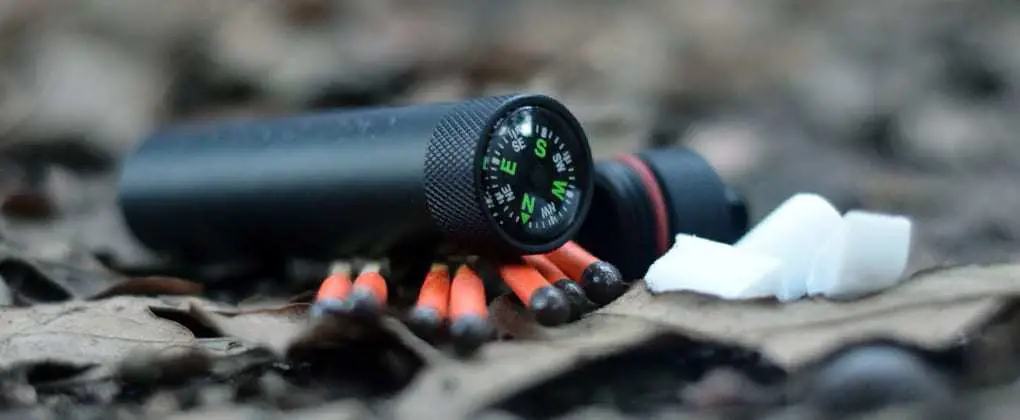
EXOTAC Matchcap XL. Larger than the standard Matchcap, holds matches and other small dry items alongside them. 1.25 oz, attaches to a pack, bottom strike pad works while holding the case in hand. If you want to consolidate matches and tinder or small fire-starting gear in one place, this is the option.
CountyComm Companion Compass XL. 1.2 oz, waterproof capsule with an integrated compass at the base. It’s designed as a general-purpose capsule — matches, money, sparker, first aid, tinder, whatever needs to stay dry. The compass is basic but functional. Good choice if you want fire and navigation in the same piece of kit.
Tinder in the Same Container
Whatever container you use, put dry tinder in with the matches. A few SOL All-Weather Fire Cubes, a piece of fatwood, or even a cotton ball with petroleum jelly sealed in a small bag. Dry tinder is often harder to find than a way to ignite it. Carrying both in the same container means you’re always working with a complete system.
Matches are the backup when your primary lighter fails. Treat them like the backup they are — dry, stored, and ready. A prescription bottle with stormproof matches and a fire cube costs you nothing and weighs almost nothing. Start there before you spend money on purpose-built gear.