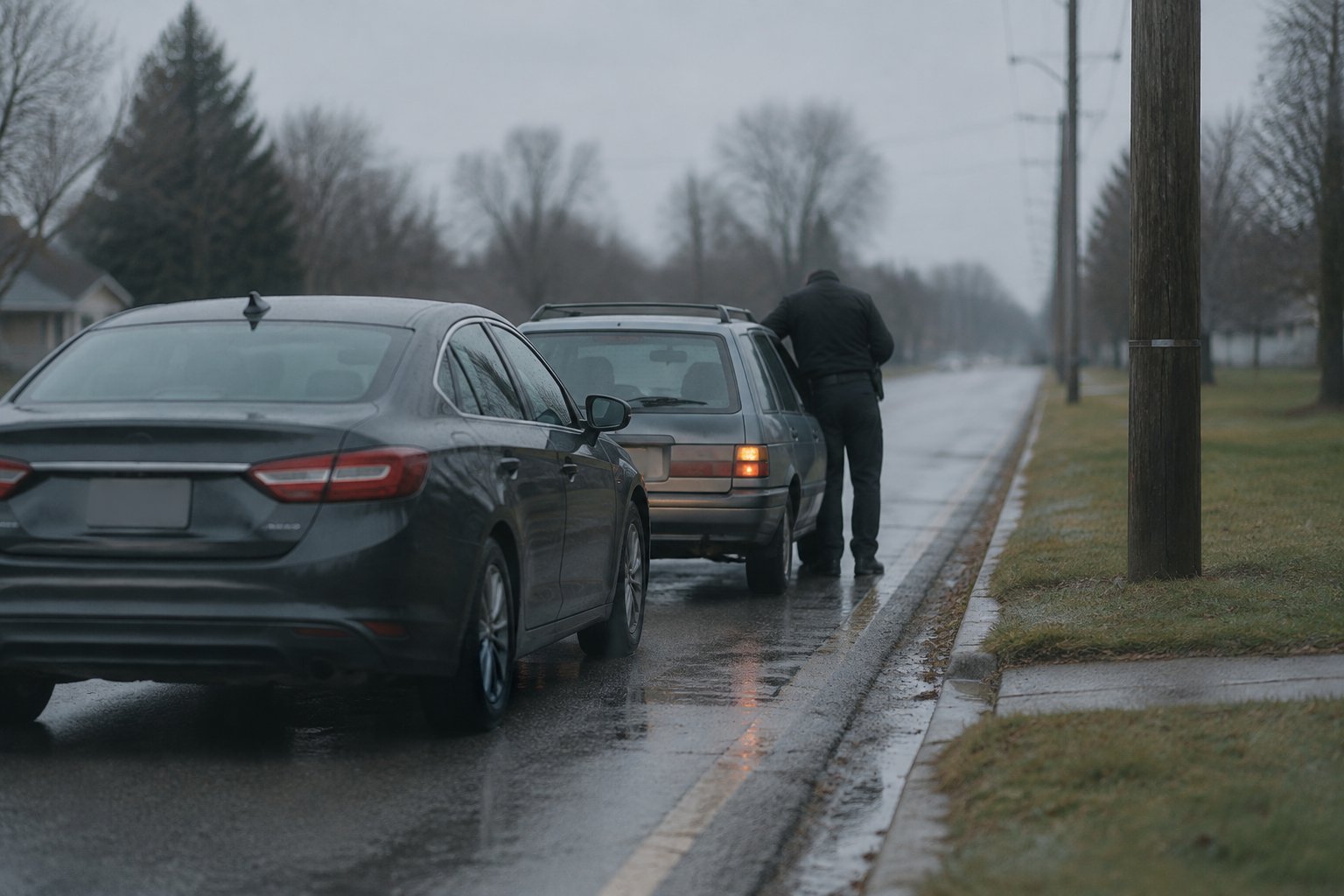
A fake police traffic stop on Interstate 17 in north Phoenix ended with the impersonator in handcuffs. The two people he pulled over were never hurt, but they believed he was a real officer the whole time. If a car with flashing lights tries to stop you and something feels wrong, slow down, turn on your hazards, call 911, and drive to a busy, well-lit place before you stop.
Officers are trained to control where a stop happens. Before they approach a car, they radio dispatch with the plate and the location, so someone always knows where they are. On a civilian stop, you have no dispatcher unless you make that call yourself. A 911 call puts a real agency on the line while you are still driving, and a dispatcher can tell you whether the car behind you is a real unit.
Save these steps in your phone today and go over them with every driver in your family, including new teen drivers.
Key Takeaways
- Red and blue lights on a dashboard do not prove someone is an officer.
- Signal that you see the car, keep driving at a slow speed, and call 911 to confirm the stop.
- Keep your doors locked and your window partly up until a real officer’s identity is confirmed.
A Pickup Driver Posed as Police on I-17
A 60-year-old man in an older Chevrolet pickup truck used dashboard lights to stop a Tesla. Troopers then found he had no police authority, and the Tesla’s own camera caught the lights he denied using.
Dashboard Lights Got the Tesla to Pull Over
The stop happened on southbound Interstate 17 near Dove Valley Road in north Phoenix. The man drove a silver or gray older-model Chevrolet pickup truck with red and blue emergency lights on the dashboard, and he pulled over a man and a woman in a silver Tesla. He wore a red polo shirt, dark jeans, and a baseball cap. He had no uniform and drove no marked car.
The Tesla’s occupants thought he was a police officer. He demanded their work badges and took pictures of them.
He later told troopers he stopped them only by flashing his headlights and waving. Video from the Tesla showed the red and blue flashing lights on his truck.
The Impersonator Called 911 Himself
The fake officer called the Arizona Department of Public Safety to report his own traffic stop. He told troopers the Tesla driver was speeding and running red lights. According to the arrest documents, he “wanted us to do something about it.”
He stayed at the scene until troopers arrived. They confirmed he had no ties to any law enforcement agency and took him into custody. It was one of several recent police impersonation arrests in Maricopa County.
Doubt Gets a Slow Drive and a Phone Call
When you doubt a stop, show that you intend to comply, keep moving at a slow speed toward a public place, and have 911 confirm the unit. Stay locked in your car until you know who is outside it.
Signal Compliance and Drive Somewhere Safer
Turn on your hazard lights right away. This tells a real officer that you see them and plan to stop. Slow to a safe speed and stay in the right lane.
Then head to the nearest well-lit, busy spot. A gas station, fire station, police station, or open business with people and cameras all work. A police commander in Maryland gave drivers the same advice: slow down, put your hazards on, and head toward a lighted area where stopping is safer.
Avoid dark shoulders, empty ramps, and dead-end streets. If you have already been checking whether you’re being followed and the car has trailed you for miles before lighting up, tell the dispatcher that too.
Call 911 Before You Open Your Door
Call 911 while you drive, using hands-free if you can. Give your road, direction, nearest exit or cross street, and a description of the car behind you. Ask the dispatcher to confirm whether a real unit is stopping you.
Stay on the line. When you stop, keep your doors locked and lower the window only a few inches. Wait until you see a marked car, a uniform, and a badge, or until dispatch confirms the officer. Pass your license through the gap. Keep your hands where the officer can see them.
Troopers Arrested the Impersonator on Scene
Troopers booked the man on felony charges. The Arizona Department of Public Safety believes he may have stopped other drivers before this one.
The Man Faces Kidnapping and Impersonation Charges
He was arrested for impersonating a peace officer, unlawful imprisonment, and kidnapping. At his first court appearance, a court official listed two kidnapping counts, one impersonation count charged as a class 6 felony, and two unlawful imprisonment counts. The court also noted a long criminal record that included a prior offense like this one.
The kidnapping and unlawful imprisonment charges show how prosecutors treat a fake stop. Holding people on the roadside under false authority counts as more than a costume.
Report an Earlier Encounter With This Truck
If you think this truck stopped you before, call 1-877-4AZ-TIPS. Look for an older silver or gray Chevrolet 2500-series style pickup with red and blue lights visible through the windshield.
Before you call, write down what you remember:
- Date, time, and location of the stop
- What the driver said and asked for
- Whether he took photos of you or your ID
- Any dashcam, doorbell, or phone video
Report it even if nothing bad happened. Your report helps investigators find a pattern.
Verify the Stop Without Escalating It
Your goal is to confirm the stop while showing clear intent to comply. Hazards, a slow speed, and an open 911 line do both at once. A real officer who sees those signals, and hears from dispatch that you called, has no reason to treat you as someone fleeing.
Keep your tone calm when you speak through the window. Say something simple: “I called 911 to confirm the stop, and I’m going to wait for them.” Never argue on the roadside, and never get out to confront the person.
Read the scene the way you would in any other threat assessment. Warning signs include:
- Lights on the dashboard only, with no marked car
- No uniform, or a uniform that looks wrong
- Requests for things unrelated to driving, like work badges
- Pressure to get out, follow them, or unlock your doors
Put 911 on your phone’s emergency shortcut and practice the route to the nearest well-lit, busy stop on the roads you drive most.
Frequently Asked Questions
What should I do if I think a fake cop is pulling me over?
Turn on your hazards, slow down, and call 911 right away. Drive to a well-lit, busy place before you stop. Keep your doors locked until the officer is confirmed.
Can I call 911 while a vehicle is trying to stop me?
Yes. Arizona DPS tells drivers to call 911 while they drive to a safer spot, and a dispatcher can confirm whether a real unit is behind you. Use hands-free calling if you can.
Do red and blue lights prove a driver is a police officer?
No. The I-17 impersonator used red and blue lights mounted on his pickup’s dashboard. Look for a marked car, a uniform, and a badge, or get confirmation from dispatch.
Is pretending to be a police officer illegal?
Yes. In the I-17 case, the man was charged with impersonating a peace officer, plus kidnapping and unlawful imprisonment. Charges and penalties vary from state to state.
What information should I report after a suspected fake traffic stop?
Report the location, time, vehicle description, plate, and what the person said or asked for. Include any video from a dashcam or phone. In Arizona, tips about the I-17 truck go to 1-877-4AZ-TIPS.