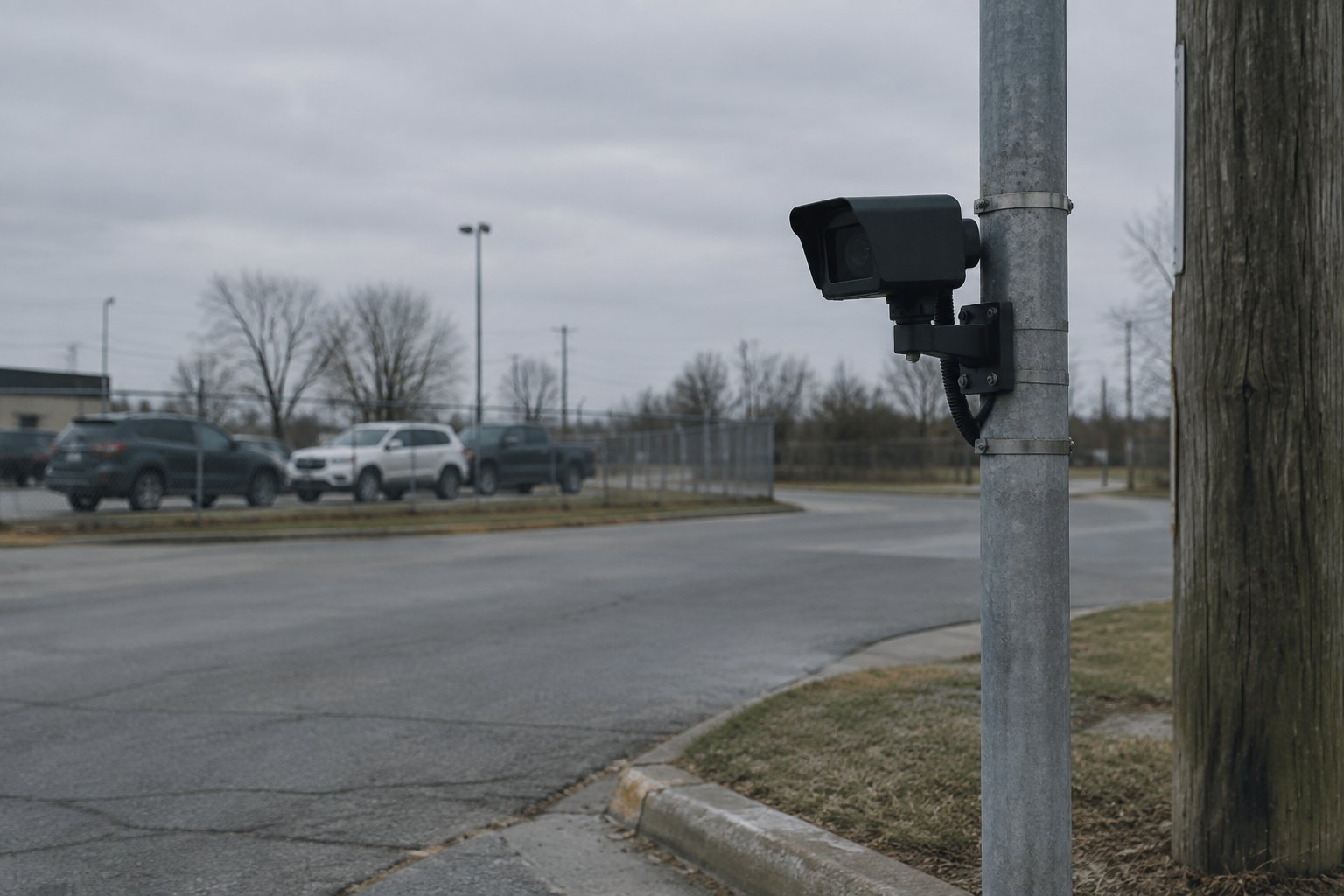
A Flock camera reads your plate, logs the time and place, and files that scan into a searchable database that thousands of agencies can query. It also catalogs vehicle traits: make, color, body style, bumper stickers, roof racks, damage. You cannot opt out of it while driving a registered vehicle on public roads, and no legal trick makes your plate invisible.
So the practical question is not how to beat the network. It is how to understand what it records, who can search it, and which lawful habits reduce your routine exposure without giving anyone a reason to look at you twice.
That distinction matters because most of the online advice about plate readers is either wishful or illegal. Plate covers, sprays, and frame tricks draw traffic stops. Awareness, route variation, and local policy engagement do not.
Key Takeaways
- Flock cameras capture plates plus vehicle attributes and turn them into searchable location records shared across jurisdictions.
- Retention, sharing rules, and audit requirements vary by contract, so verify your own city’s settings rather than assuming defaults.
- The lawful path is a normal travel profile and local policy pressure, never plate obstruction or evasion.
What Flock Cameras Collect and Make Searchable
Flock’s LPR cameras record a still image of each passing vehicle, extract the plate characters, and tag the record with time and location. Vehicle attributes get indexed alongside the plate, which means a search can start from a description even when no plate was seen.
From Plate Scans to Vehicle Records
Each scan becomes a row: plate, timestamp, camera location, and an image. Flock’s own product material describes the cameras as capturing license plates and vehicle details including plate numbers, missing or covered plates, make, color, and alterations.
Covered plates are themselves a data point. A camera that cannot read characters still logs a vehicle with an obscured plate at a specific spot and time, which is worse than being read normally.
How License Plate Recognition and Machine Learning Work
Optical character recognition pulls the plate. A separate classifier handles the vehicle attributes, sorting body style, color, and visible features into searchable fields.
The ACLU describes the process as an AI algorithm cataloging make, model, color, license plate number, bumper stickers, and even scratches. That attribute layer is why removing or dirtying a plate does not remove you from the index.
What a Vehicle’s Pattern of Movement Can Reveal
Multiple fixed cameras along a corridor produce direction and speed. Enough scans over enough days produce a routine.
The Electronic Frontier Foundation notes that stored fixed-camera data can reveal every time a plate passed a location, letting an analyst infer where a driver likely lives or works. That is the same inference chain that makes your pattern of life your biggest vulnerability in any surveillance context, and it works without a warrant in most places.
How Flock Searches Produce Investigative Leads
An investigator can run a plate, a partial plate, or a location and time window. The output is a list of vehicles and a movement history, which gets used as a lead rather than proof.
Leads built from attribute searches are the weak link. A search for a silver mid-size sedan near a given intersection returns hundreds of innocent vehicles, and somebody has to decide which ones to pursue.
Access, Sharing, and the Real Privacy Exposure
The privacy risk in a plate-reader network comes less from the camera than from who can query the database and under what rules. Access spans local police, federal agencies borrowing local searches, and private customers who choose to share with law enforcement.
Professional surveillance training makes this distinction explicit. Surveillance teams are taught that detection comes from observing repetition and coordination among watchers, and counter-surveillance is a disciplined process of route design, timing changes, and structured observation over multiple legs of travel. The civilian version breaks down here because a database query leaves no observable footprint. You cannot detect a records search the way you detect a vehicle behind you, which is why the useful civilian tools shift from surveillance detection technique toward records requests and local policy.
Who Can Search Flock Data?
Law enforcement agencies with a Flock contract can search and share data across jurisdictions. The Associated Press reports that thousands of agencies in 49 states can search and share Flock’s data across jurisdictions.
Private customers own their own camera data and control sharing settings. That control only helps when the settings are configured deliberately and reviewed.
How Police Departments, Businesses, and HOAs Use the Network
Police departments run historical and real-time searches against hotlists. Businesses and HOAs mostly use alerts and after-the-fact lookups, then hand evidence to local officers.
The HOA and retail installs are the part people underestimate. A neighborhood entrance camera documents every visitor to that neighborhood, and the board that owns it decides whether outside agencies get access.
Data Retention and Audit Trails: What Must Be Verified Locally
Retention is a contract term, not a fixed rule. Flock has announced a shorter standard window and mandatory audit tooling, with the AP reporting the company shortening the standard retention window and requiring law enforcement users to tie each search to a case number from their records management system.
Verify what your own city agreed to. Contract language, retention setting, sharing permissions, and audit reporting are all local decisions, and defaults change.
Accuracy Limits, Misreads, and Human Review
Misreads happen, and the consequences land on drivers. The ACLU has documented a mother and her children held at gunpoint after ALPR cameras wrongly flagged their car as stolen.
The EFF notes that officers are instructed to visually confirm a plate match before acting, and that failure to confirm combined with machine error has caused wrongful stops. Hotlist hits are a prompt to look, not a conclusion.
Why Cross-Jurisdiction Sharing Changes the Risk
Local data leaving the locality is where most of the published controversy sits. Search logs and city audits have surfaced sharing that exceeded what cities believed they had approved, including a Boston pilot where a city review found outside agencies accessed plate data against Boston’s wishes.
The ACLU points to Syracuse, where the police department inadvertently shared local data through the national system and it was searched 4.4 million times in a single year before the contract was canceled. Whether your own city’s sharing is narrow or wide open is an answerable question, and answering it is more productive than guessing.
Lawful Low-Profile Practices Around Plate-Reader Networks
Everything useful here is legal, boring, and durable: a normal travel profile, less routine repetition, accurate knowledge of local coverage, and pressure applied through public process. Plate obstruction, fake plates, and reflective sprays are not on the list.
Professional Surveillance Discipline vs. Civilian Privacy Practice
Professional counter-surveillance assumes a human adversary who can be observed and forced to reveal themselves. Plate readers give you no adversary to watch.
So the civilian equivalent is records work and habit design. You reduce how much your routine reveals, and you use public process to learn what is collected about it.
Build a Normal, Legal Travel Profile Instead of Chasing Invisibility
Registration current, plate clean and unobstructed, lights working, insurance valid. A vehicle that gives no reason for a stop is the strongest position available.
Anomalies attract attention. A covered plate, a missing front plate where required, or a vehicle that appears to be avoiding known camera corridors reads as noteworthy to anyone reviewing the data.
Reduce Routine Exposure Without Evading Law Enforcement
Vary departure times and routes across the week. Park in different areas rather than the same spot at the same hour.
For sensitive destinations, reduce the number of trips instead of trying to disguise them. Walking, transit, or consolidating errands changes what a camera can record, and the same gray man concealment logic of blending into normal traffic applies to vehicles.
Do not confuse this with evasion. Refusing to stop, fleeing, or altering your plate are separate offenses with their own consequences.
Use Public Records and Mapping Tools to Understand Local Coverage
Camera locations, contracts, and search audit reports are often obtainable through your state’s public records process. Ask for the contract, the retention setting, the sharing configuration, and any audit logs.
DeFlock maintains a crowdsourced map and a cancellation tracker; the AP cites its count of more than 50 agencies or jurisdictions canceling, suspending, or rejecting contracts or deactivating cameras since the start of the year. Treat crowdsourced locations as incomplete.
When to Raise a Policy Concern With Local Officials
Bring specifics to a council or board meeting: retention length, whether outside agencies can search local data, whether searches require a case number, and who reviews audit flags. Named ALPR policy questions get answers that general privacy complaints do not.
The three levers worth pushing are retention, sharing scope, and use restrictions. The ACLU publishes model bill language and contract terms covering all three.
Use Awareness and Lawful Habits, Not Evasion
Flock cameras log plates, vehicle attributes, times, and locations, then make that history searchable across agency lines. The exposure you can control is how repetitive your routine is and how well you know your own city’s retention, sharing, and audit terms.
Verify local settings through public records. Vary your patterns, keep your vehicle legally clean, and take retention and sharing questions to the officials who signed the contract.
Anti-Facial Recognition: Lawful Ways to Reduce Your Exposure covers the same approach applied to cameras that read faces instead of plates.
Frequently Asked Questions
Can Flock cameras read license plates and vehicle details?
Yes. Flock’s product documentation describes the cameras capturing plate numbers along with make, color, body style, alterations, time, and location, and flagging plates that are missing or covered. The attribute data is searchable even when characters are unreadable.
Can I find Flock license plate reader locations near me?
Partially. DeFlock maintains a crowdsourced map of reported ALPR locations, and many jurisdictions disclose camera sites in contracts or council packets available through public records requests. No public list is complete, since cameras are added, moved, and removed.
Can I see whether my license plate has been searched in Flock?
Not directly as a private individual in most places. Search audit logs belong to the agency, so a public records request to your local department is the usual route, and what gets released depends on state law and the agency’s exemptions.
How long does Flock retain license plate data?
It depends on the customer’s contract setting rather than a single company-wide rule. Flock announced a shorter standard retention window and longer preservation for data tied to a case number, so confirm the number your own city or HOA agreed to.
Why are some cities canceling Flock camera contracts?
Mostly over sharing and misuse. Cities have pulled out after finding their data reachable by outside or federal agencies beyond what they approved, and after documented cases of officers running searches for personal reasons, including firings at the Savannah Police Department in Georgia.
Can I legally stop Flock cameras from reading my plate?
No. States require a visible, unobstructed plate, and covers, sprays, and tilting devices invite citations while still logging your vehicle as having an obscured plate. Lawful reduction comes from fewer repeated trips and local policy limits on retention and sharing.