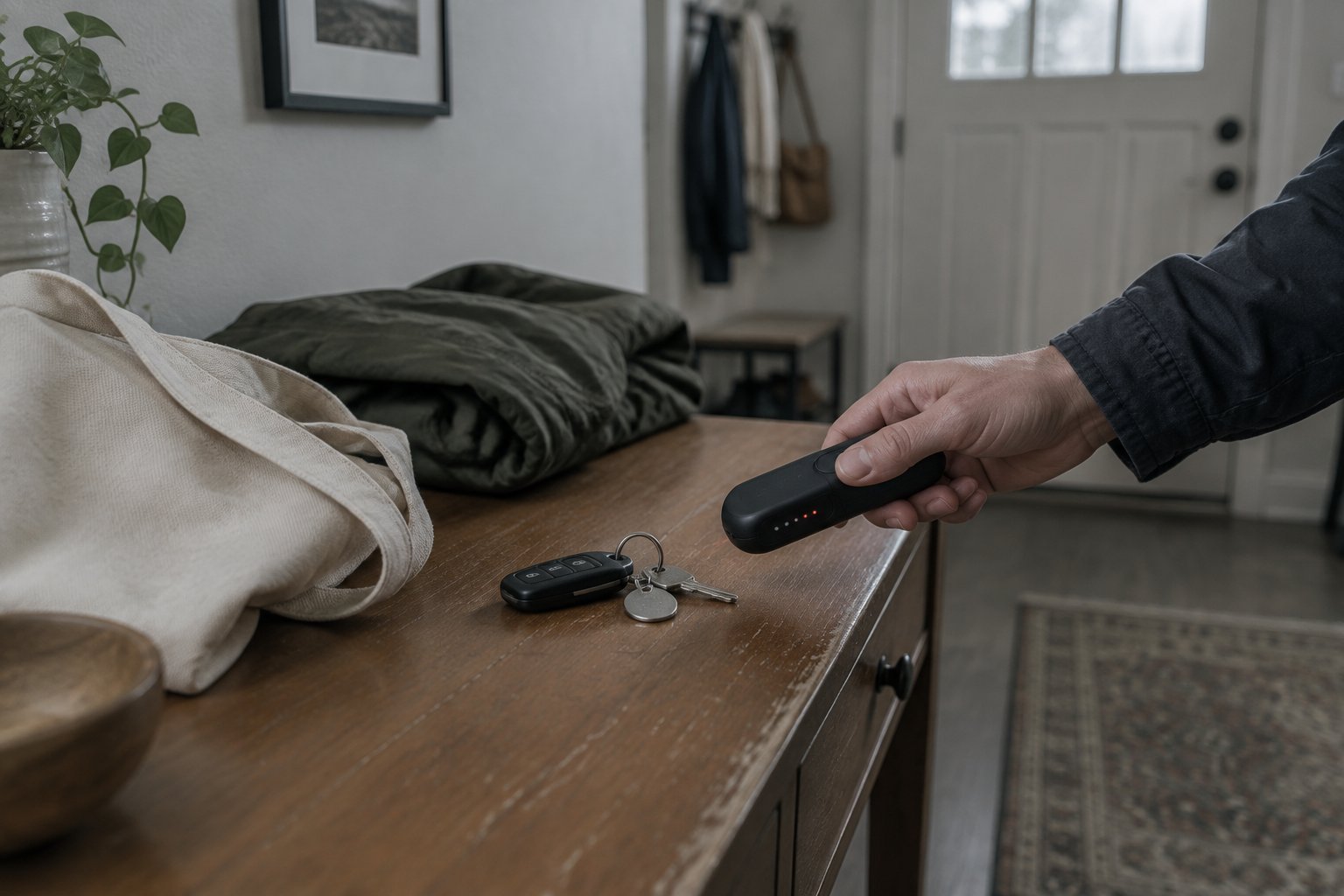
A GPS tracker detector finds transmitters. It picks up a tracker that is sending a signal while you scan, and it does that reasonably well at close range. It will not find a device that is asleep, one that only stores data, or one tucked behind enough metal to drown out its signal. A clean scan tells you nothing was transmitting near the probe during those minutes. It does not prove your car is clear.
That gap between “nothing found” and “nothing there” is where people get into trouble. Some quit looking too early. Others tear the car apart over a false alarm from their own phone. Good privacy protection treats the detector as one input in a wider counter-surveillance routine. That routine also includes your eyes, your hands, and your read on who has had access to the vehicle.
If you want the full framework behind this, start with our guide to surveillance detection essentials. Then come back and put your detector in its proper place.
Key Takeaways
- Detectors catch active transmitters and miss sleeping or logging devices.
- False alerts from nearby electronics are common, so confirm every hit by physical inspection.
- If you find something, document it, leave it in place, and bring in qualified help when safety is in question.
What Can a Detector Actually Find?
A detector finds energy. RF detection catches radio bursts, and magnetic field detection catches strong magnets. Camera modes catch lens reflections. Each method sees one kind of evidence, so each one leaves the others unchecked.
In professional work, a sweep is a team process with a baseline. Technicians map the normal RF environment first, then look for what does not belong. They pair a spectrum analyzer with a full physical search, and some use non-linear junction detectors that respond to electronics even when those electronics are powered off. Surveillance teams learn the same lesson from the other side. They plan around the checks a target is likely to run. The civilian version usually skips the baseline and treats one beep or one silence as the answer. That shortcut is where most self-checks break down.
What Does an RF Sweep Detect?
An RF bug detector registers transmissions in the bands trackers use. Those include cellular bands for live-reporting units, Bluetooth, and Wi-Fi. The alert gets stronger as you close on the source, which lets you narrow the search.
The catch is timing. Many hidden GPS trackers report in short bursts at set intervals. Some only wake when the vehicle moves. If you sweep a parked car between bursts, the bug detector stays quiet. A real-time tracker that is actively reporting is the best case for RF signal detection.
What Can Magnetic Detection Reveal?
Magnetic detection looks for the strong magnet on a slap-on case. That makes it useful for magnetic tracker units stuck to frame rails, wheel wells, and bumper cavities.
It has hard limits. Your car is full of steel, speakers, and motors that already produce magnetic fields. A hardwired unit or one held on with tape or zip ties has no magnet to find. Treat a magnetic hit as a reason to look closer. It is a lead, and you still need to confirm it by sight.
Do Camera Modes or Phone Alerts Help Find Trackers?
Hidden camera detection features, such as a red LED lens finder or infrared scanning, are built to spot camera lenses. They do little against a sealed GPS box with no lens. They belong in hotel rooms and rentals more than under your car.
Phone alerts cover a narrow slice of the problem. iPhone and Android can flag unknown Bluetooth item trackers in their ecosystems. They do not see a standalone cellular GPS unit. Our companion guide on AirTag detectors covers what those alerts mean. For hidden surveillance devices that use cellular data, a phone alert is not part of the picture.
Where Do Clean Scans and Alerts Mislead?
Both a clean scan and an alert can point you the wrong way. Silence can hide a sleeping or logging device. A loud alert can come from your own phone or a neighbor’s router. The fix in both cases is the same: slow down and confirm by physical inspection.
Why Can a Tracker Go Undetected?
A hidden tracking device can beat a consumer sweep in several ways:
- Passive loggers store location data and transmit nothing until someone retrieves them.
- Sleep modes and motion triggers keep a vehicle GPS tracker silent while you scan a parked car.
- Short, spaced bursts can fall between the moments you pass the probe over the right spot.
- Metal panels and engine bay placement weaken the signal before it reaches your detector.
- Hardwired units blend in with factory modules and aftermarket alarms.
One workaround is to have a trusted person drive while you watch the detector. Moving the car can wake a motion-triggered unit. Even then, a logger stays silent.
What Causes False Alerts?
False positives come mostly from ordinary electronics. Your phone, a Bluetooth headset, a smartwatch, Wi-Fi routers nearby, and passing vehicles all transmit in the same bands trackers use. The car’s own telematics and key fob systems can add to the noise.
Cut the noise before you scan. Power down your devices or leave them well away from the car. Scan in a quiet spot, and start at low sensitivity. Raise the setting only after the first pass. A hit that repeats in the same place across passes deserves attention. A hit that wanders around usually does not.
Which Detector Features Matter, and Which Claims Need Scrutiny?
A few features change how usable a detector is in the field:
| Feature | Why it helps |
|---|---|
| Adjustable sensitivity levels | Lets you trade detection range for fewer false hits |
| Signal strength display | Shows you whether you are getting closer to the source |
| Vibration alert option | Keeps the check quiet when audible alarms would draw attention |
| LED alerts | Give you a silent visual readout |
| Rechargeable battery | Supports repeat sweeps without hunting for cells |
Battery life matters most if you check often. Be skeptical of any anti-spy device sold as able to “find any tracker.” AI-powered detection claims deserve the same doubt. No consumer RF tool can see a device that is not transmitting, and marketing language cannot change that.
How Should You Inspect and Escalate Safely?
Keep your inspection quiet, document everything, and escalate early when safety is in play. How you run the check shapes what happens next. That includes whether the person who placed a device learns that you found it.
How Do You Make a Low-Profile Vehicle Check?
Run the check somewhere private, such as your own garage, and at a normal time. Avoid anything that looks like a reaction to being watched. A sudden car-wide search in a public lot sends a signal of its own.
Work from outside to inside:
- Wheel wells and the undercarriage, using a flashlight and an inspection mirror
- Bumper cavities, the grille area, and behind the license plate
- The OBD-II port under the dash
- Under seats, the console, the glovebox, and the trunk and spare-tire well
Look for anything that does not match the rest of the car: fresh zip ties, tape, clean boxes on dirty surfaces, or extra wiring spliced into a harness. Then run your RF pass. If you think someone is watching you outside the car too, how to tell if you’re being followed covers that side of the problem.
How Should You Document a Suspected Device?
If you find something, leave it where it is. Photograph it from several angles. Include wide shots that show its location and close shots of any labels, serial numbers, or wiring. Note the date, time, and place in a paper notebook or on a device the other party cannot access.
Write down who has had access to the car recently. Include service visits, valet use, and borrowed keys. This record helps police, an attorney, or a sweep technician far more than a device pulled off in a hurry.
When Should You Seek Professional or Law-Enforcement Help?
Call law enforcement first if you believe you are being stalked or threatened. Contact them before you disturb anything. Removing a device can tip off the person monitoring it, and that can raise your risk. A domestic violence advocate or an attorney can help you plan around that.
For lower-risk situations, a TSCM professional or an auto electronics technician is the right next step. That applies when a device is wired into the vehicle, when you cannot tell a tracker from a factory module, or when the car scans clean but your concern stays. Also consider innocent explanations first: a lender, a fleet program, or a previous owner may have installed it.
Treat a Clean Scan as One Piece of Evidence
A detector answers one narrow question: was something transmitting near the probe while you scanned? It catches active trackers well and misses passive loggers, sleeping units, and shielded placements. Its alerts need physical confirmation because everyday electronics trip them.
Pair every sweep with a hands-on inspection and an honest look at who has had access to the vehicle. Document anything you find without disturbing it. If your safety is in question, bring in law enforcement or a qualified sweep technician before you act on your own.
Frequently Asked Questions
Do GPS tracker detectors really work?
Yes, against trackers that are actively transmitting during your scan. They miss passive loggers and devices that are asleep between reports. Use one as part of a physical inspection.
Can a cell phone detect a GPS tracker?
Only certain Bluetooth item trackers, through the built-in unknown tracker alerts on iPhone and Android. A standalone cellular GPS unit does not show up on those alerts. A phone also adds RF noise during a detector sweep, so keep it away from the car.
Can an app find a hidden GPS tracker in my car?
No app can reliably find a cellular GPS tracker. Apps built for Bluetooth trackers will not pick up a unit plugged into the OBD-II port or hidden under the frame. Use a flashlight and mirror, then an RF detector.
Can I tell if someone put a tracker in my car?
Sometimes. Warning signs include someone knowing your movements without being told, unfamiliar boxes or wiring found during service, and recent access by someone you do not trust. A careful visual check plus an RF sweep catches many devices, but a clean result does not prove the car is clear.
What should I do if I find a suspected tracker?
Leave it in place, photograph it, and write down when and where you found it. If you feel threatened, contact law enforcement before you disturb the device. Otherwise, have a qualified technician confirm what it is and handle it.