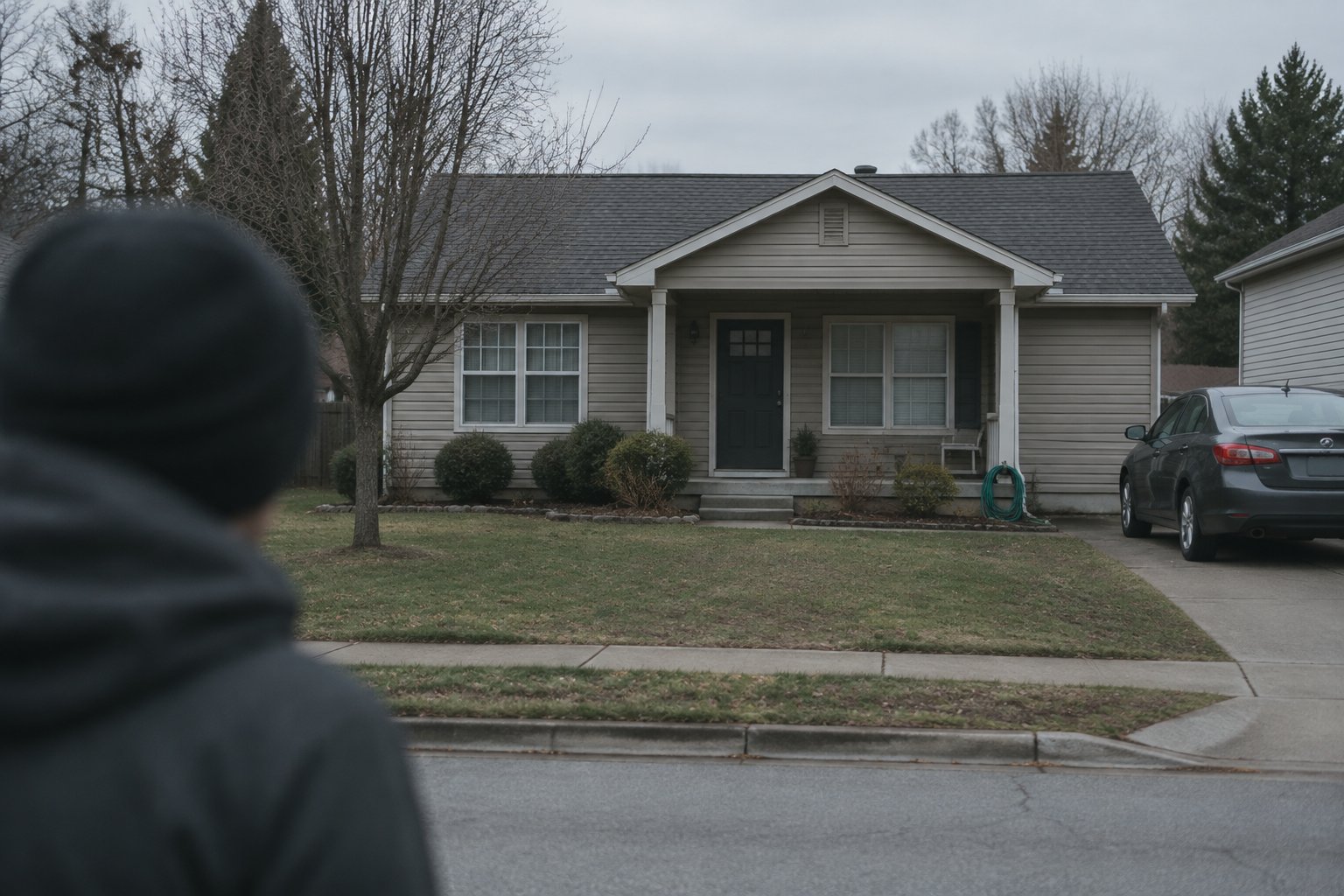
Most burglars choose houses the same way you would pick a parking spot in a hurry. They want the easiest option with the lowest chance of trouble. A house that looks empty, is easy to reach unseen, and has a weak door gets picked. A house that looks watched, occupied, and slow to enter gets skipped.
That decision happens fast, often from the sidewalk or a passing car. You cannot control who walks by. You can control what they see when they look. Tonight, walk out to the street and view your home the way a stranger would. Then fix the first thing that bothers you.
Key Takeaways
- Burglars favor homes that look empty, hidden, and quick to enter and leave.
- Checking for occupancy follows patterns you can learn to spot and report.
- Solid locks, good lighting, and signs of life move most burglars to the next house.
What Makes a House Look Like an Easy Target?
A house looks easy when it seems unoccupied and offers a hidden path to a weak door. Three signals drive the choice: signs nobody is home, cover for the approach, and entry points that open without noise.
An Empty-Looking House Draws Attention
Burglars want to avoid people. Most residential break-ins happen during the day, when adults are at work and kids are at school.
Signs of an empty home are simple to read:
- Drawn blinds that never change
- Mail or packages sitting out
- The same single lamp on for days
- An uncut lawn or unshoveled walk
A car in the driveway helps a little, but only if it moves. A car that never leaves reads as parked, not as someone home.
Hidden Approaches Invite a Closer Look
Tall hedges, privacy fences, and dark side yards give cover. If someone can reach your back door without a neighbor seeing them, your house moves up the list.
Trim shrubs below window height. Keep side gates latched. Stand at your back door and ask who could see you there. If the answer is nobody, that is your weak spot.
Weak Entry Points Seal the Decision
Burglars prefer doors and windows that open quickly and quietly. The front door, back door, and garage are the most common entry points.
Look for cheap strike plates, sliding doors without a bar, and an open garage with an interior door left unlocked. Our guide to home security basics for doors covers the hardware fixes.
How Might Someone Check Whether a Home Is Occupied?
Burglars confirm a home is empty by watching routines, noting ignored deliveries, and sometimes knocking. Knowing these steps lets you spot them and report them early.
Routines and Deliveries Reveal Absences
A fixed schedule tells an outsider when your house is empty. If you leave at 7:30 every weekday and packages sit on the porch until evening, anyone watching learns your window.
In professional counter-surveillance training, you learn to spot the same person or vehicle across time and distance, and you plan routes to test it. Civilians rarely have that luxury. You will not run detection routes to the grocery store. What you can do is notice repeat faces and cars near your home, and vary the small things: departure times, which lights are on, when packages get picked up. The piece on why your routine is your biggest vulnerability goes deeper.
A Knock Tests Whether Anyone Answers
Many convicted burglars describe knocking first. If someone answers, they ask for a fake name or offer a service and leave. If nobody answers, they go around back.
Answer through the door or a video doorbell. Speak so the person knows someone is home. You do not need to open the door.
Report Behavior, Not Appearance
Call your local non-emergency line when behavior fits a pattern. Examples include someone trying door handles, walking into backyards, photographing homes, or a car circling the block several times. Note the time, direction, vehicle, and plate. If a crime is in progress, call 911.
Which Changes Make a Home Less Appealing?
The changes that work most make entry slow, make approaches visible, and make your home look lived in. Start with doors, then light, then cameras and alarms.
Reinforce the Doors You Use Daily
Replace short strike plate screws with 3-inch screws that reach the frame. Add a deadbolt with a full throw. Put a bar or pin in sliding doors.
Lock the door between your garage and house every night. For extra layers inside, look at door stoppers and barricades. A nightly lock-up routine like the one in our before-bed security checklist keeps this from slipping.
Light the Paths Someone Would Use
Motion-activated lights on side yards and back doors expose anyone moving there. Aim them at the path, not at the street, so they do not blind neighbors or you.
Keep sightlines open. A lit, visible back door is a poor choice for someone who needs privacy.
Put Cameras and Alarms Where They Work
Security cameras belong at entry points: front door, back door, and garage. Mount them high enough that they cannot be knocked down, with a clear view of faces.
Alarm systems and home security systems deter best when they are visible. Post the yard sign and window stickers. Arm the system every time you leave, not just on trips. An alarm that is off does nothing.
Make Entry Difficult and Activity Easy to Notice
Burglars move on when a house takes too long to enter and too much risk to approach. You control both.
Reinforce your doors. Light your side and back approaches. Trim cover near windows. Arm your alarm every time. Change the routines that broadcast when you are gone. Answer knocks so people know the house is occupied.
Know your neighbors, and agree to watch each other’s homes during trips. Store valuables and firearms in a quality safe, and check our notes on safe locks before you buy. Then run that walk from the street once a season, and fix the weakest spot first.
Frequently Asked Questions
What houses do burglars tend to avoid?
Burglars avoid homes that look occupied, well lit, and visible to neighbors. Visible cameras, alarm signs, and solid doors add time and risk, which pushes most of them to an easier house.
Does a car in the driveway deter burglars?
A car helps only when it signals someone is home. If it never moves, it looks parked and stops working. Pair it with changing lights and picked-up deliveries.
What should I do if I think someone is watching my house?
Write down times, descriptions, vehicles, and plates, then call your local police non-emergency line. Call 911 if someone is trying to get in. Our guide on how to tell if you’re being followed helps you check whether the attention follows you away from home.