This is Part 4 in our Everyday Carry Kit series. If you haven’t read the earlier articles, start with Part 1: How to Build a Tier 1, Primary EDC Kit.
You’re staying in a friend’s spare room, halfway across the country. The funeral wrapped up hours ago, but no one wants the night to end. You didn’t plan to stay another night. You didn’t pack for it. And now you’re in borrowed clothes, holding a borrowed toothbrush, wondering how to charge your phone or shave in the morning.
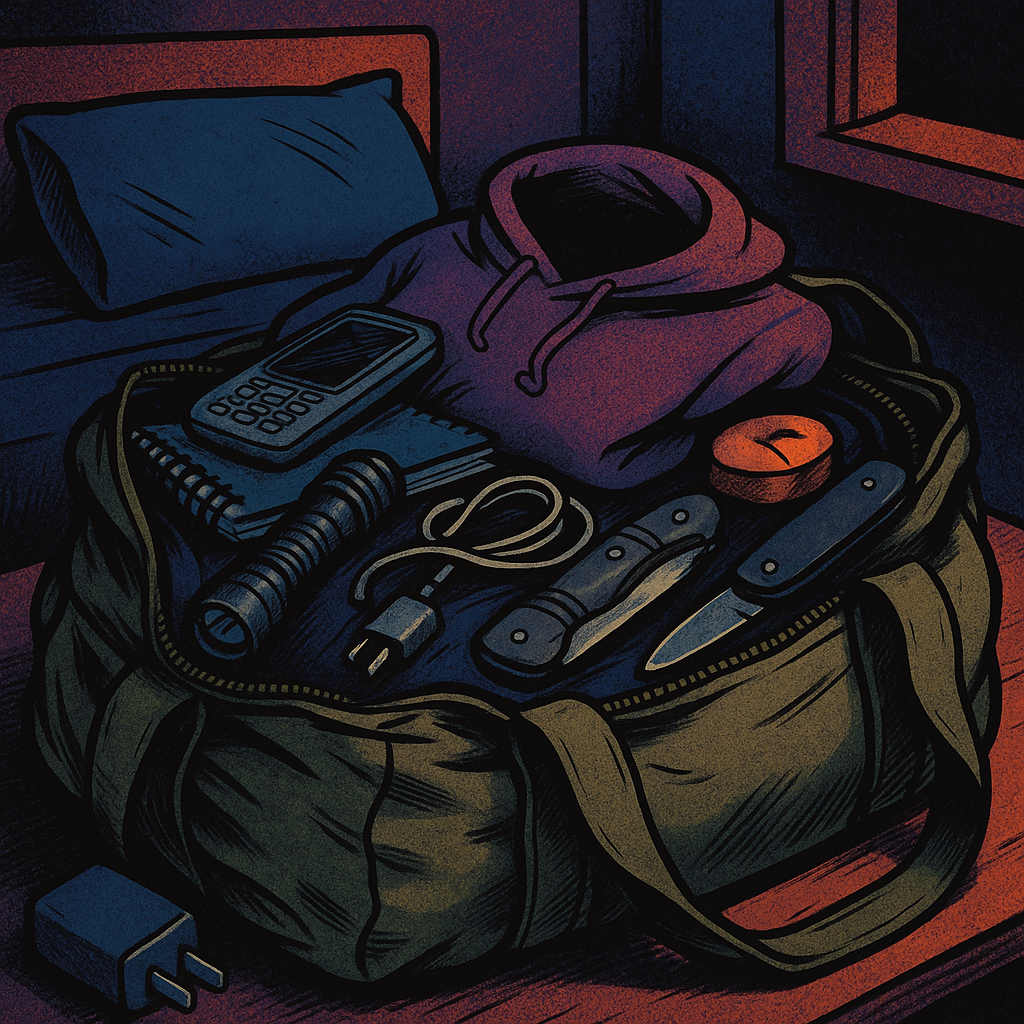
Then you remember: there’s an old canvas bag at the back of their hall closet. Yours. You left it here last year. Inside: a flashlight, a spare shirt, an old charger, basic meds, a pocketknife, and a notepad with numbers you’d forgotten. Nothing fancy. Just enough.
That’s Tier 4.
What Tier 4 Actually Is
Tier 4 is gear that lives a layer deeper than what you normally carry. It’s not your daily carry. Not your go-to pack. Not the organized kit you take on a weekend trip. It’s the stuff that stays tucked away until something breaks, runs out, or takes longer than planned. You don’t count on it. But it counts when you need it.
Think of it as margin. The space between running out and being fine.
Where It Lives
Tier 4 kits are typically stashed somewhere you visit occasionally but don’t think about daily. A few common locations:
- A friend’s guest room or family cabin
- A locker at work or a gym
- The back of a vehicle you drive but not every day
- A storage unit you access a few times a year
Where doesn’t matter as much as one rule: you don’t count on it being there. If you get it, great. If you don’t, you manage. That’s the difference between Tier 4 and everything else.
What Goes In It
This isn’t a fixed list. Tier 4 is whatever you’ve left behind intentionally — or accidentally — that might be useful later. But if you’re building one on purpose, here’s how to think through the categories.
A usable change of clothes. A clean shirt, clean underwear, and a basic layer like a hoodie or light jacket. Nothing you’d miss if it sat in a bag for a year. This alone handles more situations than any gear ever will.
Basic medical. A handful of ibuprofen, allergy meds, a bandage or two, and any prescription meds you can spare. Not an IFAK — just enough to handle the low-grade stuff that comes with being away from your normal routine.
Power. A small battery pack with enough capacity to charge a phone once. A short USB-C cable. A car charger if the kit lives in a vehicle. Power is the thing you need before almost everything else when plans fall apart.
Light. A headlamp with fresh batteries. Not your primary carry light — a backup that you forgot you had. A headlamp works better than a flashlight when you need both hands.
Cash. $20 to $40 in small bills. Cash moves when cards don’t. A dead phone, a system outage, or a card that gets flagged while traveling — small bills solve all of it without an argument.
Contact information. A small notebook with key phone numbers written down. Your spouse. A close family member. A doctor if you need one. You know these from memory right now. You won’t when your phone is dead and you’re stressed.
A tool. A small pocket knife or multi-tool you don’t carry daily. Not your primary blade. Just something that covers the basics if you’re without your normal kit.
How to Set One Up
Pick a small bag or container — a canvas tote, a drawstring bag, a small dry sack. Stock it with the categories above. Mark it with a piece of tape and the year you stocked it. Then check it once a year: swap out anything expired or outdated, replace the batteries, swap in a current spare shirt.
That’s it. The whole system takes an hour to set up and maybe fifteen minutes a year to maintain. The value isn’t in the kit being perfect. It’s in the kit being there.
The Scenarios It Handles
Tier 4 gear doesn’t cover emergencies. Your other tiers do that. Tier 4 covers inconvenience — the kind that becomes a problem if you don’t have anything to work with.
- You broke your only pair of shoes and need to get somewhere presentable
- You’re out of town and unexpectedly staying three more days
- You had to hand off your pack at a security checkpoint and lost access to your kit
- You’re helping a friend or family member who didn’t bring anything
- A trip that was one night turned into a week
The stuff that made any of those manageable — that’s Tier 4. You didn’t plan for it. You just had it.
Build one. Put it somewhere you visit occasionally. Forget about it. That’s the point.
Do you have a Tier 4 kit somewhere, even if you didn’t call it that? Drop it in the comments.